Moth Graphics for Illustrations and Digital Products
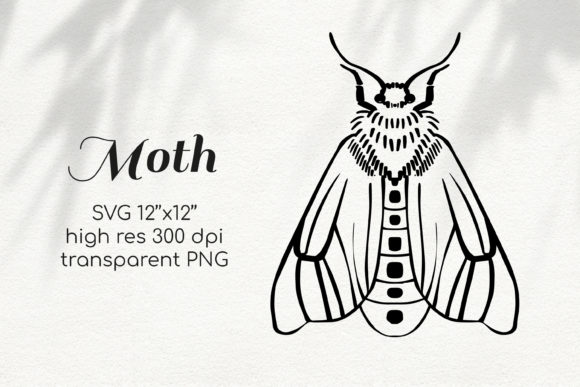
Opening the download for a new graphic asset is always a moment of potential. With this hand-drawn black and white moth illustration, the first impression is one of delicate elegance. The line art feels detailed yet clean, carrying a mood that’s both natural and slightly mystical. It doesn’t scream "bold" or "cute," but leans into a decorative, minimalist aesthetic. This visual personality suggests a niche appeal: it will attract buyers looking for something more subtle than a loud graphic, perhaps for a rustic, feminine, or modern handmade brand.
Evaluating a Graphic Asset for Real Product Creation
Before I ever consider listing a finished product, I test a new design asset across several real-world scenarios. For this moth clipart, the practical question isn’t just "Is it pretty?" but "Where does it work commercially?" The included SVG and PNG files are the starting point. I immediately see applications in sublimation designs for t-shirts and pillow covers, or as a crisp element for printable wall art and greeting cards. But a seller’s mindset means thinking beyond a single use.
Where This Moth Illustration Excels in a Shop
This graphic design asset shines in areas where its intricate lines and transparent background can be showcased. Its strength is in scalable, decorative layouts. Imagine it as the central motif on a tote bag print, or repeated as a pattern on digital paper for a scrapbooking kit. For a Cricut project, the clean SVG lines should theoretically allow for precise cutting on sticker designs or appliqués.
For presentation, this kind of asset is invaluable. A strong product mockup, like the moth art printed on a mock mug or displayed as part of a themed nursery print collection, builds customer trust and perceived value. It helps with visual storytelling in your Etsy shop or on a print-on-demand platform, making your listing images look cohesive and professional. When bundled with other natural-themed illustrations, it can form a seasonal collection that boosts click-through potential.
Building Products Around a Single Design
My approach is to treat one core asset as a seed for multiple digital products. This moth line art isn’t just clipart; it’s a commercial design component.
- For printable products, it becomes the art for a postcard, a framed print, or planner sticker sheets.
- As merchandise graphics, it adapts to t-shirt graphics, mug designs, and tumbler wraps via sublimation.
- In the template space, it can anchor a Canva template for social media graphics or blog graphics, or be part of an invitation template set.
- For digital downloads, it could be included in a larger clipart bundle or a digital paper pack aimed at crafters.
The key is organization—clearly labeling files for customers and confirming the commercial license covers all these finished products.
Presentation and Professional Polish
A graphic like this also elevates your shop’s overall brand identity. Using it consistently across product mockups, promotional visuals, and even packaging design sketches can create a strong visual hierarchy for a small business branding. It feels more premium than generic clipart, which helps a handmade business stand out in a crowded creative marketplace.
Practical Notes and Potential Pitfalls
Experience teaches you to check the edges. With any line art asset, there are areas where careful testing is non-optional.
First, I always test the PNG transparency on both white and dark backgrounds in a thumbnail-sized preview—a crowded or low-contrast thumbnail kills sales. For print products, I run a test print, even at home, to verify the resolution holds up and the fine lines don’t disappear.
For the SVG file, which is crucial for Cricut or Silhouette projects, I inspect the cut paths in my software. Are the lines continuous and clean? A tiny, overly complex detail might not cut cleanly on vinyl. This asset should be used carefully in products where absolute precision cutting is needed.
Typography pairing is another subtle seller skill. This moth illustration pairs beautifully with a delicate script font for a feminine touch, a clean sans serif for a modern look, or even a classic serif for a rustic vibe. I experiment with these combinations in mockups before finalizing a product.
Where to Use With Caution
- Avoid using it in tiny sticker details where the intricate lines may become a blur.
- It might not suit overly complex layouts with many other competing elements.
- Steer clear of low-resolution print products where the detail could be lost.
- Be wary of placing it on dark backgrounds without first testing the contrast—the black lines need to pop.
- It’s not ideal for text-heavy templates where the graphic should be a subtle accent, not the focus.
The Final Step: From Asset to Listed Product
After all the testing, the real value of a graphic like this moth line art clipart becomes clear. It’s a versatile, mood-setting piece that can anchor a range of sellable products. For a seller preparing a new collection on Etsy or Shopify, it offers a cohesive starting point. You can build a line of sublimation designs, a set of printable wall art, and a bundle of social media templates all from one core illustration.
The process I’ve described—testing on mockups, checking technical specs, considering typography, and identifying both strengths and careful-use cases—is what turns a simple download into a professional-looking online product collection. It moves from being just a "hand-drawn moth butterfly" to a reliable commercial design asset that helps you create with confidence and sell with clarity.